AI isn’t a threat to public relations and communication professionals. Our silence is.
Why communication professionals must lead the strategic AI conversation
By Adrian Cropley, FRSA, FCSCE, IABC Fellow, SCMP
When artificial intelligence (AI) first started appearing in our communication toolkit, it brought a mix of curiosity and concern. Some saw the opportunity: faster content, sharper insights, more time for strategic thinking. Others worried—about being replaced, getting it wrong, or walking into an ethical minefield.
Now, AI is no longer just emerging—it’s shaping our world in real time. And the real issue isn’t if we use AI. It’s how we lead with it.
Here’s the truth: we’re not leading strongly enough.
There’s a gap—and it’s risky
According to the Reimagining the Future of the Communication Profession research from the Global Alliance, while 81% of communication professionals say AI is improving their efficiency, less than half have a framework for its responsible use.
That’s not just a technical gap. It’s a leadership one.
And when we stay silent—when we use the tools without speaking up about ethics, morals, values or purpose—we’re handing over our most vital asset: trust.
Why it’s our job to lead
Some might assume AI is the domain of IT, legal or data teams. It’s not. It’s ours.
No one is better placed than communication professionals to lead on responsible AI use.
o We understand people. We work with culture, meaning, nuance and context
o We build and protect trust—and trust is not something an algorithm can deliver.
o We guide change. AI is the most significant change many of us will see in our careers.
o We shape narratives, manage risk, and uphold standards.
We’re not just AI users—we must be its ethical and moral architects.
The Venice Pledge: Our Professional Promise
The Venice Pledge for Responsible AI in Communication which was launched in Venice in May 2025 through the Global Alliance for Public Relations and Communication Management is a commitment to lead with transparency, fairness, and human oversight.
It’s not a policy—it’s a promise. That we won’t trade integrity for speed. That we won’t let machines replace human judgment.
The pledge reminds us: trust isn’t built by data. It’s built by people.
Walking the talk: the CSCE ai playbook
To help professionals turn those values into action, the Centre for Strategic Communication Excellence created the Communication Professional’s Playbook in the Age of AI.
It’s not theoretical. It’s practical. It gives four strategic “plays”:
Build Trust: Stay credible in a sea of AI content and potential reputational damage
Support Alignment: Help leaders clearly communicate purpose and values
Lead Responsible AI: Drive the conversation and establish the frameworks
Simplify and Enable: Use AI to enhance, not replace, human creativity, efficiency and learning
These are the plays we need to drive as we go into 2026
AI is not the enemy
Let’s be clear—AI isn’t coming for our jobs. Used well, it’s a powerful enabler.
We’re already using AI to:
Draft and personalise content at speed
Deep research and summarise data for insight and decision making
Analyse sentiment at scale, as well as predictive analysis
Translate and localise to reach our audience
Automate tasks and take on specific roles
It helps simplify, so we can lead. But if we don’t step up, we risk being seen as users of tools—not shapers of strategy.
New era, new skills
To lead in this space, we need more than tech skills—we need evolved identities.
The CSCE has identified four leadership roles for communication professionals in the AI age:
The Trust Builder – guarding reputation and values
The Alignment Orchestrator – driving clarity across change
The Responsible AI Leader – guiding ethical adoption
The AI Simplifier – helping people embrace what’s useful and develop AI literacy
Each demands we stop waiting to be included in the AI conversation—and start leading it.
Building capability: the CAICP program
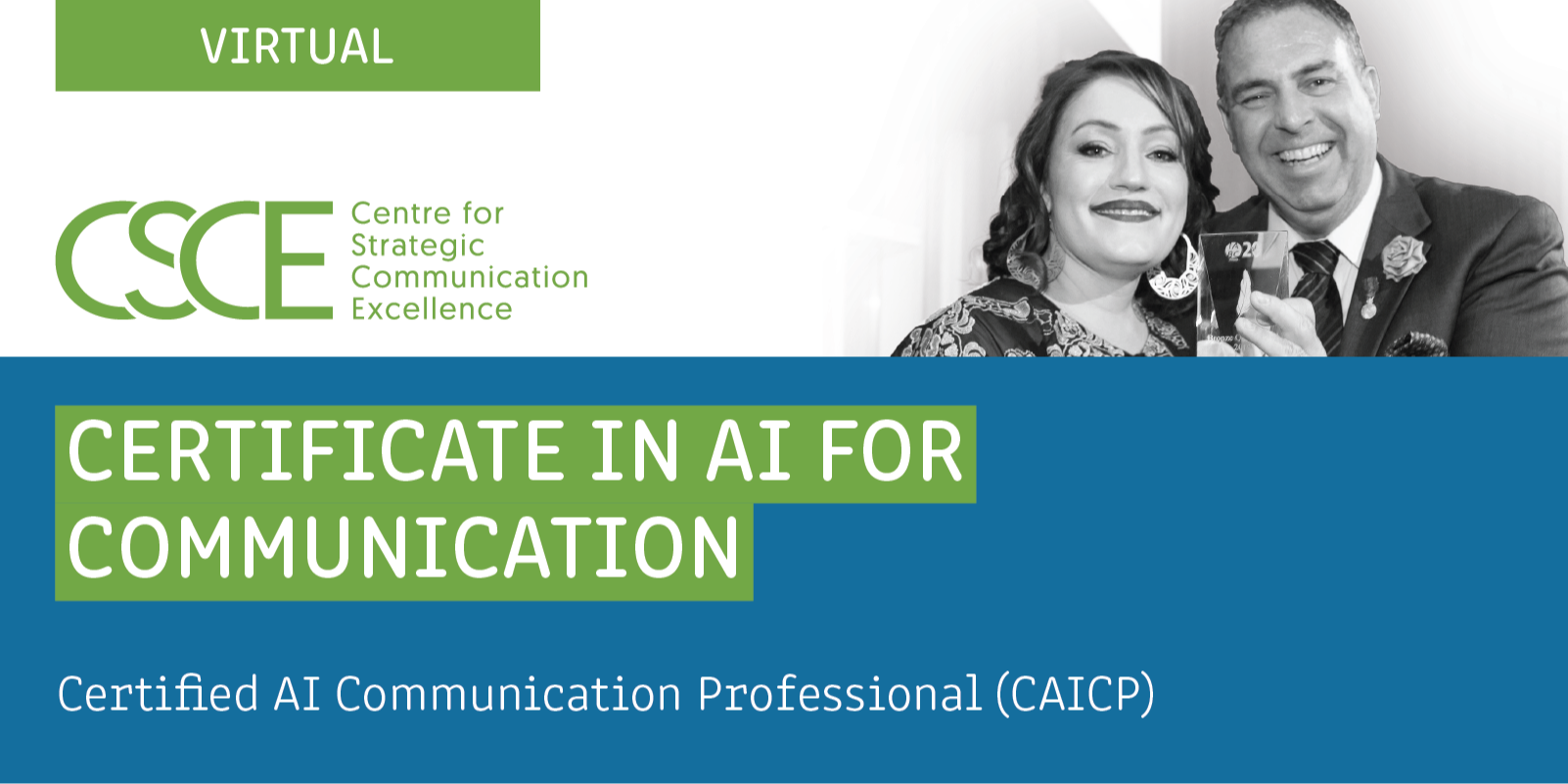
To support this shift, we launched the Certified AI Communication Professional (CAICP) Training and certification program.
This global certification runs throughout 2026 and includes live cohorts across Asia Pacific, North America and Europe/Africa.
It covers three modules:
Foundations of AI in Communication – tech, tools, ethics and the Venice Pledge
AI for Strategic Influence and Engagement – using AI for stakeholder insights and engagement
Implementing AI in Organisational Communication – real-world application and planning
Participants complete a practical project—like building a roadmap, designing an ethical comms strategy or creating an AI agent.
This is not about mastering tools. It’s about owning the future.
Register for 2026:
Asia Pacific dates and registration
North America dates and registration
Europe/ Africa dates and registration
We’ve been here before
We’ve seen this before—social media, digital disruption, change fatigue.
The professionals who succeeded weren’t the most technical. They were the most strategic. The most ethical. The most human.
AI is no different. But the stakes are higher.
This time, the question isn’t how we use the tools. It’s whether we still have the authority to guide decision-making in a machine-shaped world.
That authority won’t be given to us. We have to claim it.
It’s Time to Step Up
If we want to protect what matters—trust, integrity, connection—we can’t afford to sit back.
The future of communication won’t be defined by prompt engineers. It will be shaped by professionals who understand the context, people and meaning.
That’s us!
Let’s not wait for others to decide how AI will be used in our organisations. Let’s lead the conversation—and the future.
Get AI Certified in 2026
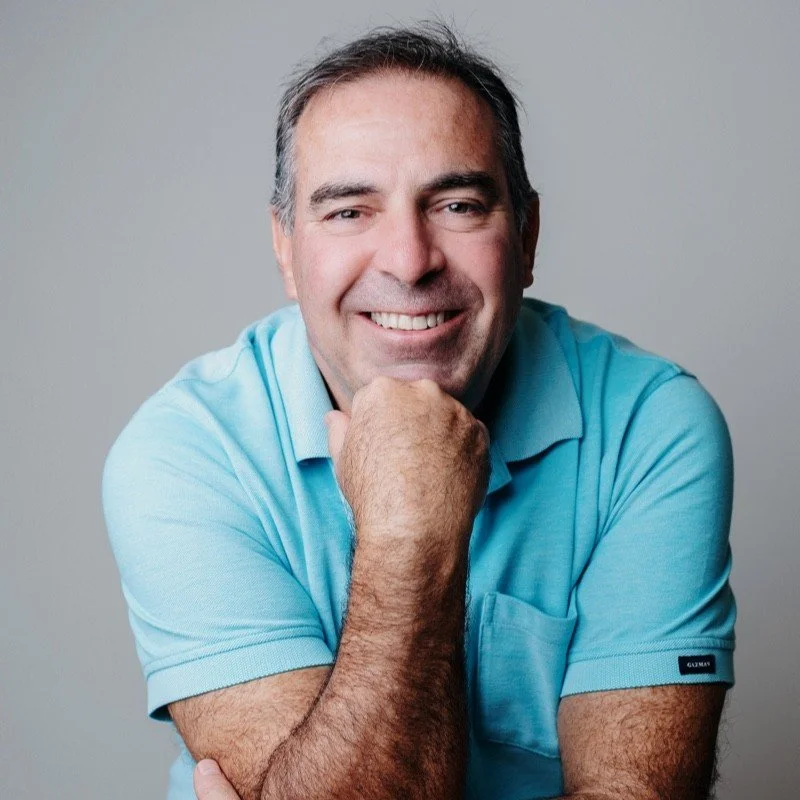
Adrian Cropley, FRSA, FCSCE, IABC Fellow, SCMP is co-founder of the Centre for Strategic Communication Excellence and CEO of Cropley Communication. Global Alliance Board Member.
Any thoughts or opinions expressed are that of the authors and not of Global Alliance.